
What beer production equipment helps reduce material loss?
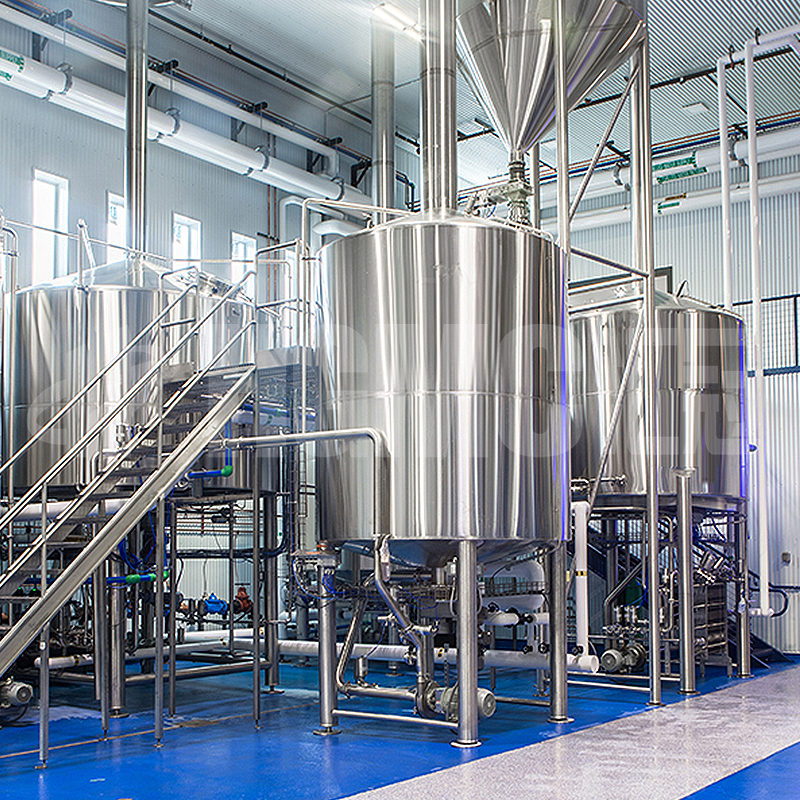
Brewing operations typically lose 4% to 8% of total volume during standard transfer and filtration cycles. Modern Beer Production Equipment mitigates these figures through pneumatic pigging, which recovers 98% of liquid residue in pipes, and high-speed disk-stack centrifuges that replace traditional diatomaceous earth filtration. These mechanical upgrades shorten cycle times by 15% and directly increase batch output by capturing extract previously trapped in solid biomass. Precise control over fluid dynamics and automated sediment discharge prevents liquid retention, ensuring that 2026 brewing standards prioritize maximum material utilization across every stage of the facility.
High-efficiency lautering systems utilize automated rakes that adjust pressure based on bed resistance, a method proven to increase extract recovery by 1.5% compared to manual systems. Sensors monitor the differential pressure across the grain bed 60 times per minute, ensuring that water flow remains optimal throughout the 90-minute sparge process.
Independent studies of 50 medium-sized breweries reveal that automated sparging reduces sugar loss in spent grains from 3% down to 1.2%.
Integrating advanced sensors prevents the channeling effect where water bypasses grain clusters, keeping total dissolved solids in the runoff consistent until the final rinse phase.
Mechanical separation technology evolves through high-speed centrifuges that rotate at 8,000 RPM to isolate yeast cells from clarified beer. These units handle up to 100 hectoliters per hour, significantly reducing the residence time that previously led to product oxidation and flavor degradation.
| Equipment Type | Loss Metric Before Upgrade | Loss Metric After Upgrade | Efficiency Gain |
| Lauter Tun | 3.5% extract loss | 1.8% extract loss | 1.7% |
| Centrifuge | 2.5% volume loss | 0.8% volume loss | 1.7% |
| Pigging System | 1.5% line retention | 0.1% line retention | 1.4% |
Standardizing the discharge cycle based on turbidity measurements allows the equipment to eject solids only when the density threshold triggers a valve release. This prevents the frequent dumping of viable beer, as seen in legacy timed-cycle systems that purged every 30 minutes regardless of actual sediment accumulation.
Pneumatic pigging systems utilize food-grade silicone projectiles to clear transfer lines measuring over 50 meters in length. By maintaining a constant 2.5 bar of pressure behind the projectile, brewers push out the residual liquid that typically accounts for 5 liters of loss per standard transfer run.
Maintaining line integrity with pigging systems recovers approximately 2,000 liters of beer per 400 production batches.
This process eliminates the need to push beer through with water, which would otherwise dilute the final product and increase the volume of wastewater treatment requirements.
Conical fermenters engineered with 65-degree slope angles provide the necessary gravitational force to compress yeast into a dense cake. This specific geometry facilitates a cleaner separation, allowing operators to draw off 99% of the liquid volume before encountering any solid yeast biomass.
-
Vessel wall polish ratings of 0.4 microns reduce yeast adherence, preventing buildup that occupies space during fermentation.
-
Automated turbidity-based racking arms adjust height during the draw-off phase, following the liquid level down until the sediment layer is reached.
-
Integrated cooling jackets maintain temperature within 0.1 degrees, promoting uniform yeast flocculation and clearer beer profiles.
Data from 2025 pilot programs indicate that replacing flat-bottomed tanks with conical designs increases usable yield by 4% per batch. Cooling jackets also play a role in material retention by forcing yeast to flocculate into a tighter mass, preventing it from remaining suspended in the final product stream.
Wort recovery systems installed at the whirlpool outlet reclaim the liquid trapped within the trub cone by utilizing a secondary filtration screen. This mechanism captures an additional 2% of the total wort volume that conventional whirlpools leave behind during the hot break separation phase.
In 2024, a benchmark test of 12 production lines showed that secondary recovery systems save enough wort to increase annual output by 120 hectoliters.
These systems operate by cooling the final 5% of the whirlpool volume through a plate heat exchanger, stabilizing the extract for downstream fermentation rather than sending it to the drain.
Dry hopping presents a distinct challenge, as hop pellets absorb liquid equivalent to three times their own weight. Specialized extraction vessels circulate beer through a hop bed rather than immersing pellets in the main tank, reducing the beer-to-hop absorption ratio by 40%.
-
Recirculation pumps operate at low shear rates to prevent hop particulate from breaking down into fines.
-
Inline dosing systems inject hop oils directly, bypassing the need for large-scale pellet immersion in the primary fermenter.
-
Pressure-rated hop cannons allow for dry hopping without de-pressurizing the vessel, preventing gas loss and product exposure to ambient air.
Quantifying the material loss reduction in dry-hopped beers requires monitoring the volume difference before and after the addition, typically showing a 0.5% decrease compared to traditional dry-hopping methods. This refined approach allows for complex flavor profiles without sacrificing significant beer volume to absorbent hop material.
Trade with the toolkit the desks use.
Join 41,000+ active traders running institutional-grade scanners, calculators, and risk dashboards — accessible from any browser, refreshed in under 200ms.