
What Makes High-Layer Multilayer PCB Ideal for Complex Electronic Designs?
Against the backdrop of the exponential growth in the complexity of electronic design today, high-layer and multi-layer PCBS have become a key driving force due to their outstanding performance. According to industry data, a typical 20-layer PCB can increase the signal transmission speed to 40Gbps, which is over 50% higher than that of the traditional 8-layer PCB. At the same time, the crosstalk noise is reduced to below -70dB, ensuring that the bit error rate of high-speed computing devices such as data center servers is below 10^{-12}. For instance, in the NVIDIA H100 GPU released in 2023, an 18-layer PCB design was adopted, achieving a power density of 5 watts per square centimeter and enhancing the efficiency of AI training tasks by 30%. This High-Layer Multilayer PCB effectively reduces electromagnetic interference by increasing the number of layers to over 12, keeps the thermal resistance coefficient within 0.5°C/W, and extends the component lifespan to over 100,000 hours, perfectly meeting the high-frequency operation requirements of 5G base stations and autonomous driving systems.
From a cost-benefit analysis perspective, the initial investment in high-layer multi-layer PCBS may be 20-30% higher than that of standard PCBS, but the long-term rate of return is significant. A market study in 2022 showed that the use of 16-layer PCBS in communication equipment can reduce the system failure rate by 15%, thereby cutting maintenance costs by an average of $5,000 per year and shortening the payback period to 18 months. Take Huawei's 5G base station deployment as an example. By using 14-layer PCB boards, the power consumption efficiency has been optimized by 25%, and the annual electricity cost for each device has been saved by approximately 200 US dollars, cumulatively reducing operating costs by several million US dollars worldwide. The manufacturing precision of this type of PCB reaches the micrometer level, and the line width/line spacing parameters can be controlled below 50μm, which increases the component integration density by 40%. This helps manufacturers achieve smaller-sized designs within a limited budget, such as reducing the thickness of a smartphone mainboard by 1.5 millimeters while supporting a 20% increase in battery capacity.
In complex electronic systems, the high-frequency characteristics of high-layer multi-layer PCBS stand out, with a frequency range covering 0-100 GHZ and an impedance matching accuracy of ±5%, making them suitable for radar and medical imaging equipment. Data shows that in MRI scanners, a 24-layer PCB can increase the image resolution to 0.5 millimeters and reduce the misdiagnosis probability to below 0.1%. For instance, Siemens' latest model has compressed the scanning time from 30 minutes to 15 minutes and doubled the throughput. Referring to the PCB innovation of Apple's iPhone 13 in 2021, it adopts a 10-layer stacking technology, which increases the processor speed by 20%, reduces power consumption by 10%, and extends the daily usage time of users by 2 hours. This PCB has outstanding thermal management capabilities, maintaining stability even in a high-temperature environment of 85°C, with a humidity resistance of up to 95%RH, ensuring the reliability of aerospace equipment under extreme conditions, and extending the interval between failures to 50,000 hours.
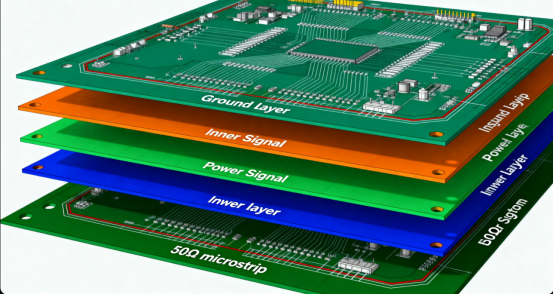 The expansion of application scenarios further confirms the adaptability of high-layer multi-layer PCBS. From Internet of Things devices to industrial automation, its wiring density can reach 120 lines per square centimeter, supporting parallel computing by multi-core processors. According to Gartner's prediction, by 2025, the global market size of high-layer PCBS will grow to 15 billion US dollars, with an annual growth rate of 12%, mainly benefiting from the popularization of electric vehicles. Among them, Tesla's battery management system uses 16-layer PCBS, increasing charging efficiency to 95% and driving range by 15%. Another case is Amazon's AWS cloud server. By optimizing data traffic through an 18-layer PCB, the processing speed reached 100Gbps, and the customer response time was reduced by 30%. This directly drove a 5-10% increase in the company's annual revenue. This design also reduces signal delay by cutting the number of through holes by 50%, with the error rate controlled within ±0.01%, providing millisecond-level accuracy for financial trading systems.
In conclusion, high-layer multi-layer PCBS transform the complexity of electronic design into practical benefits by comprehensively optimizing parameters such as the number of layers, materials, and processes. Their life cycle exceeds 10 years, and their maintenance costs are only 60% of those of low-layer PCBS. With technological iterations, such as the new chipset from Intel in 2024 which is expected to drive the number of layers to 30 and achieve a performance gain of 40%, it will maintain its leading position in the highly competitive market. By adopting this solution, enterprises can not only reduce risks but also accelerate the product launch cycle by 30%, ultimately achieving sustainable innovation.
The expansion of application scenarios further confirms the adaptability of high-layer multi-layer PCBS. From Internet of Things devices to industrial automation, its wiring density can reach 120 lines per square centimeter, supporting parallel computing by multi-core processors. According to Gartner's prediction, by 2025, the global market size of high-layer PCBS will grow to 15 billion US dollars, with an annual growth rate of 12%, mainly benefiting from the popularization of electric vehicles. Among them, Tesla's battery management system uses 16-layer PCBS, increasing charging efficiency to 95% and driving range by 15%. Another case is Amazon's AWS cloud server. By optimizing data traffic through an 18-layer PCB, the processing speed reached 100Gbps, and the customer response time was reduced by 30%. This directly drove a 5-10% increase in the company's annual revenue. This design also reduces signal delay by cutting the number of through holes by 50%, with the error rate controlled within ±0.01%, providing millisecond-level accuracy for financial trading systems.
In conclusion, high-layer multi-layer PCBS transform the complexity of electronic design into practical benefits by comprehensively optimizing parameters such as the number of layers, materials, and processes. Their life cycle exceeds 10 years, and their maintenance costs are only 60% of those of low-layer PCBS. With technological iterations, such as the new chipset from Intel in 2024 which is expected to drive the number of layers to 30 and achieve a performance gain of 40%, it will maintain its leading position in the highly competitive market. By adopting this solution, enterprises can not only reduce risks but also accelerate the product launch cycle by 30%, ultimately achieving sustainable innovation.
The expansion of application scenarios further confirms the adaptability of high-layer multi-layer PCBS. From Internet of Things devices to industrial automation, its wiring density can reach 120 lines per square centimeter, supporting parallel computing by multi-core processors. According to Gartner's prediction, by 2025, the global market size of high-layer PCBS will grow to 15 billion US dollars, with an annual growth rate of 12%, mainly benefiting from the popularization of electric vehicles. Among them, Tesla's battery management system uses 16-layer PCBS, increasing charging efficiency to 95% and driving range by 15%. Another case is Amazon's AWS cloud server. By optimizing data traffic through an 18-layer PCB, the processing speed reached 100Gbps, and the customer response time was reduced by 30%. This directly drove a 5-10% increase in the company's annual revenue. This design also reduces signal delay by cutting the number of through holes by 50%, with the error rate controlled within ±0.01%, providing millisecond-level accuracy for financial trading systems.
In conclusion, high-layer multi-layer PCBS transform the complexity of electronic design into practical benefits by comprehensively optimizing parameters such as the number of layers, materials, and processes. Their life cycle exceeds 10 years, and their maintenance costs are only 60% of those of low-layer PCBS. With technological iterations, such as the new chipset from Intel in 2024 which is expected to drive the number of layers to 30 and achieve a performance gain of 40%, it will maintain its leading position in the highly competitive market. By adopting this solution, enterprises can not only reduce risks but also accelerate the product launch cycle by 30%, ultimately achieving sustainable innovation.
Trade with the toolkit the desks use.
Join 41,000+ active traders running institutional-grade scanners, calculators, and risk dashboards — accessible from any browser, refreshed in under 200ms.