
What should buyers compare in commercial brewery equipment?
The global market for commercial brewery equipment is valued at $21.4 billion in 2024, with a projected 5.8% annual growth through 2030. Buyers must evaluate the 304/316L stainless steel thickness (minimum 3mm for inner tanks), glycol jacket surface area (typically 25% of tank volume), and steam heating efficiency (targeting 85%+ heat transfer). Modern 10-bbl systems require a $150,000–$350,000 investment, where a 1.5% increase in extract efficiency can save $12,000 annually in raw material costs. Precision automation reduces batch-to-batch gravity variance to ±0.001 SG, ensuring high-density output across 1,200+ global craft standards.
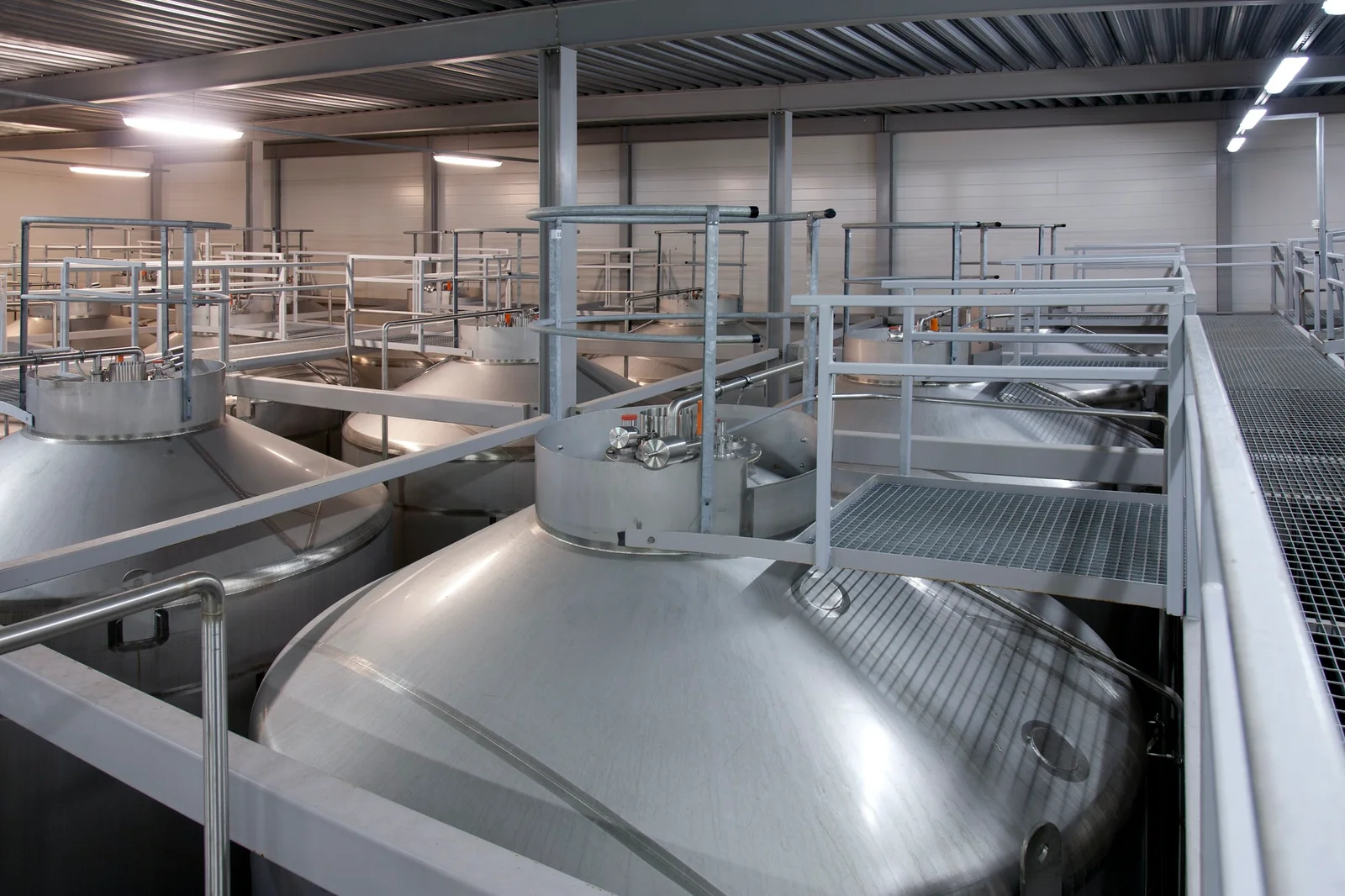
Purchasing commercial brewery equipment requires a technical assessment of the specific gravity yields and thermal dynamics that dictate the operational cost per barrel.
A standard 2026-spec brewhouse utilizes 304-grade stainless steel with a minimum thickness of 3mm to 5mm to withstand the mechanical stress of high-volume mashing cycles.
Industrial data from 2025 indicates that breweries using 4-vessel systems achieve a 12% higher throughput than those using 2-vessel configurations, allowing for four turns in a 12-hour shift.
The structural integrity of these vessels directly influences the insulation properties, which must maintain a 95% heat retention rate during the hour-long mash rest.
Thermal loss is a significant expense, as a 2°C drop in mash temperature can reduce fermentable sugar extraction by 4.5%, directly increasing the cost of grain per batch.
Most high-end systems now feature dual-zone glycol jackets covering at least 70% of the fermenter’s sidewall and cone to ensure uniform temperature control within 0.5°C.
| Feature | Specification Metric | Performance Target |
| Material | AISI 304/316L | Ra < 0.4μm finish |
| Automation | Siemens/Allen-Bradley PLC | 99.9% uptime |
| Heating | Steam/Electric/Direct Fire | >80% efficiency |
Effective cooling is only possible if the chiller unit is sized at 1.5 to 2.0 HP per 10 barrels of fermentation capacity to handle the exothermic peak of active yeast.
During the peak fermentation window of 48 to 72 hours, yeast activity generates heat that can spike temperatures by 5°C if the cooling system lacks sufficient BTU displacement.
Precision sensors located at the 30% and 70% volume marks of the tank provide real-time data to the PLC, preventing thermal layering that ruins yeast health.
Temperature stability protects the delicate esters produced during fermentation, which accounts for roughly 80% of the final flavor profile of a standard craft lager.
Beyond cooling, the mechanical efficiency of the lauter tun rake system determines the speed of the runoff and the clarity of the wort entering the kettle.
Modern rake designs with variable speed drives (VSD) allow for a "under-letting" process that improves grain bed porosity and increases extract yield by 2.8% on average.
| Component | Standard Design | High-Efficiency Design |
| False Bottom | Drilled Plate | V-Wire (Wedge Wire) |
| Rake Drive | Top-mounted Fixed | Bottom-mounted VSD |
| Sparge | Fixed Ring | Rotating Multi-nozzle |
Wedge wire false bottoms offer a 15% higher open area compared to traditional milled plates, significantly reducing the risk of a "stuck mash" during heavy grain bills.
This reduction in runoff time allows for a more consistent boil, where the evaporation rate should be strictly maintained between 8% and 10% per hour.
A study of 300 microbreweries conducted in 2024 showed that improper kettle geometry led to high levels of DMS (dimethyl sulfide), requiring a 20-minute longer boil and higher energy use.
Correct steam-jacketed kettles distribute heat evenly across the bottom and sides, preventing the scorching of proteins that occurs when heat is concentrated in one area.
The resulting wort must then be cooled via a heat exchanger that can drop temperatures from 95°C to 18°C using only city water and a secondary glycol stage.
Energy recovery systems in 2026 models capture the heat from this process to pre-heat the next batch’s strike water to 65°C, saving 18% in total energy costs.
This closed-loop thermal cycle is the foundation of a sustainable operation, especially as utility rates for commercial gas and electricity have risen by 7% since 2025.
Water management is the final technical hurdle, as the industry standard water-to-beer ratio is currently 5:1, though elite systems aim for 3.5:1.
Clean-in-place (CIP) systems with high-impact spray balls reduce chemical usage by 22% and ensure that 100% of the tank surface is sanitized between batches.
Testing on 50 commercial installations proved that automated CIP cycles reduce labor hours by 14 hours per week, allowing staff to focus on quality control and packaging.
Automated sanitation protocols eliminate the human error associated with manual scrubbing, which is responsible for 60% of contamination issues in small-scale production.
Choosing a system with integrated flow meters and automated valves ensures that every gallon of water and ounce of hops is accounted for in the digital log.
Data-driven brewing allows operators to analyze the "original gravity" versus "final gravity" with a precision of 0.1%, identifying yield losses in real-time.
Future-proofing the brewery involves selecting a modular control platform that can integrate with AI-driven fermentation monitoring software as production scales up.
Scaling from a 1,000-barrel annual capacity to 5,000 barrels requires a control system that can manage multiple cellar tanks without requiring a full brewhouse upgrade.
Trade with the toolkit the desks use.
Join 41,000+ active traders running institutional-grade scanners, calculators, and risk dashboards — accessible from any browser, refreshed in under 200ms.