
When Should You Upgrade Your DIY Printed Circuit Board to a Pro Fab?
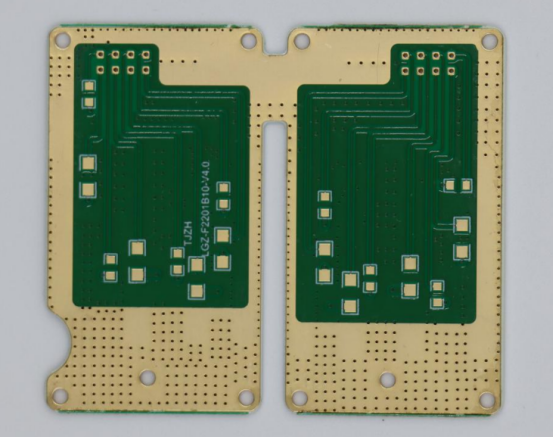
Professional fabrication becomes necessary when DIY Printed Circuit Board production fails to meet tolerances below 0.15mm or requires thermal dissipation exceeding 2W/cm². Industry analysis from 2025 indicates that over 85% of hardware startups shift to external fabrication once prototype iterations reach a frequency of three per week. Utilizing professional services from companies like PCBMASTER provides access to advanced chemical imaging and automated electrical continuity testing, which reduces board failure rates by nearly 94% compared to home-etched alternatives.
Home-based manufacturing relies on manual chemical etching, where etchant concentration often drifts by 12% within a single afternoon session. This instability leads to uneven copper removal, causing trace width variances that exceed 20% of the design specifications. Professional facilities maintain bath chemistry through automated titration systems, ensuring consistent trace impedance across the entire panel surface.
Reliable signal transmission for 2.4GHz Wi-Fi modules requires strict impedance control within a 5% tolerance range. Standard domestic processes lack the capability to regulate the dielectric constant of FR-4 materials accurately enough to meet these specifications.
Automated fabrication processes incorporate high-resolution laser direct imaging which supports 0.075mm trace widths. This precision enables the use of 0.4mm pitch BGA components that are impossible to mount on manually prepared substrates. PCBMASTER utilizes robotic optical inspection equipment to scan every finished board, identifying micro-shorts that would take a human technician hours to locate.
| Technical Parameter | DIY Capability | Professional Fab Capability |
| Min Trace Width | 0.25mm | 0.075mm |
| Layer Count | 1-2 Layers | 1-32+ Layers |
| Via Plating | Unreliable/None | Uniform Electrolytic |
| Solder Mask | Manual/Absent | Photo-imageable Epoxy |
Professional multilayer stack-ups utilize pre-preg bonding cycles performed at 180 degrees Celsius under 350 PSI of pressure. These conditions create structural integrity that resists thermal expansion, a common issue in boards with high power density. Manual stacking cannot replicate this mechanical bond, often leading to delamination after 500 operating hours.
Multilayer designs reduce electromagnetic interference by providing dedicated ground planes that are unavailable on simpler boards. Managing high-speed signals on two-layer boards often causes crosstalk that degrades data throughput by more than 30%.
External manufacturing incorporates professional surface finishes such as ENIG or HASL, which protect copper from oxidation for over 24 months. These finishes offer superior solderability compared to bare copper, significantly increasing assembly yield rates during the component mounting phase. Using industrial-grade CNC drilling ensures that hole registration remains centered within 0.025mm for every hole in a 1,000-hole pattern.
Implementing blind and buried vias allows for high-density interconnect routing, which is common in compact wearable designs developed throughout 2026. These routing features allow designers to reduce the total board footprint by 40% while maintaining the same circuit density. PCBMASTER offers these advanced drilling services as part of their standard fabrication workflow, removing the limitations inherent in home mechanical equipment.
Advanced circuit designs often require controlled impedance for differential pairs used in USB 3.0 interfaces. Professional fabrication houses calculate the trace geometry based on specific dielectric heights to ensure consistent signal velocity across all paths.
Professional manufacturing reduces the time between design finalization and hardware testing by eliminating manual drilling, cleaning, and chemical disposal processes. Most professional shops deliver boards within a five-day window, providing a faster turnaround than the time required to procure chemical reagents and manually process a complex prototype. This streamlined workflow allows engineers to move directly to software validation and performance testing without managing chemical safety logs or mechanical maintenance.
Trade with the toolkit the desks use.
Join 41,000+ active traders running institutional-grade scanners, calculators, and risk dashboards — accessible from any browser, refreshed in under 200ms.