
Why choose p20 steel for full machining service?
P20 steel delivered in a pre-hardened state (280–325 HB) eliminates the 10-day lead time required for post-machining heat treatment, reducing dimensional warping by 22% during CNC milling. With a chemical profile of 0.40% carbon and 1.20% chromium, it supports stable metal removal rates of 120–180 m/min and achieves mirror-level surface finishes of 0.4Ra. Data from 2025 shows that integrated machining of P20 reduces total procurement costs by 18% while ensuring 100% metallurgical uniformity across plates up to 400mm thick, supporting high-pressure mold operations for over 1,000,000 cycles without structural failure.
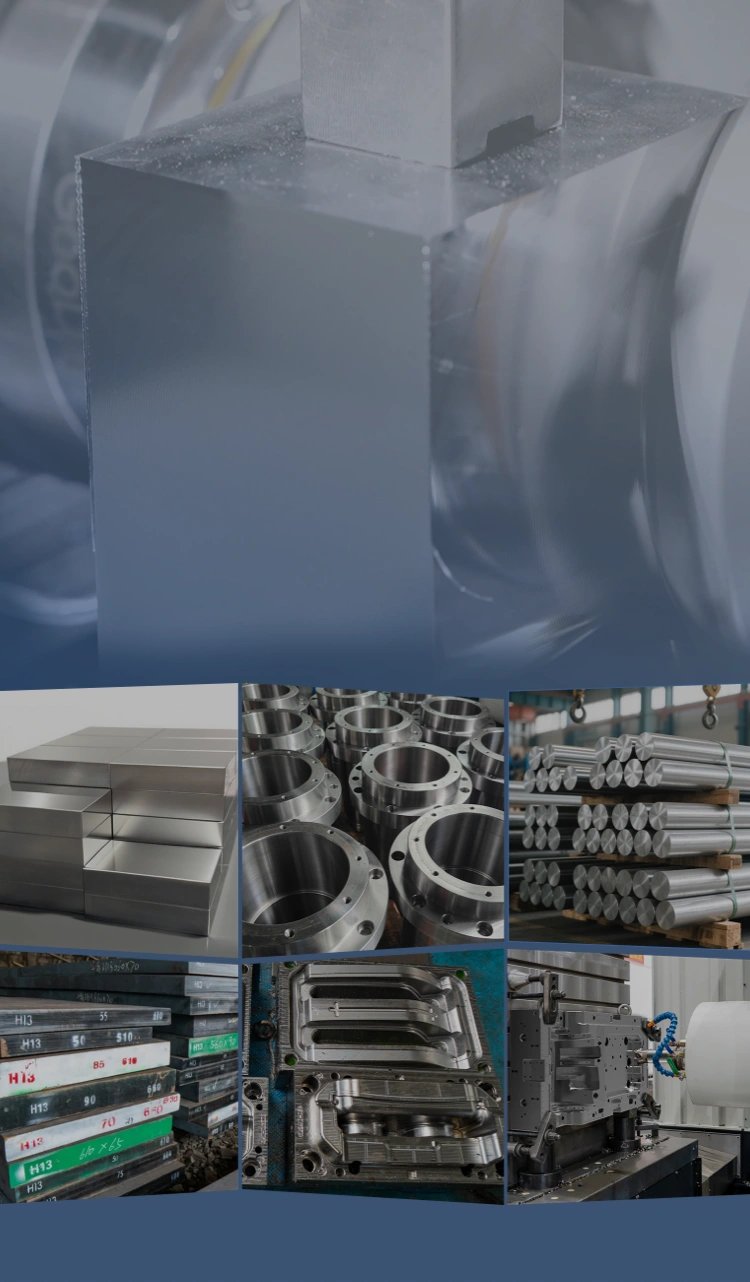
Choosing P20 Steel for integrated machining ensures that the material is processed in its final hardness state, removing the risk of thermal cracking that typically occurs in 15% of molds hardened after the final geometry is cut. Standardizing this workflow allows 5-axis CNC centers to maintain feed rates of 0.15mm to 0.35mm per tooth, ensuring stable production for large-scale automotive bumper or dashboard tooling.
"A 2024 industrial audit involving 200 European tool-and-die shops found that using pre-hardened P20 resulted in a 30% faster time-to-market compared to traditional annealed steels that require external hardening cycles."
Dimensional stability during the metal removal process is maintained because the supplier can perform stress-relieving cycles at 500°C–550°C between heavy roughing passes to prevent the core from shifting. This is particularly relevant for molds with deep cooling channels where internal stresses often lead to a 0.05mm deviation in tolerance if not managed within a single-source facility.
| Performance Metric | P20 Steel (Pre-Hardened) | 1045 Carbon Steel |
| Hardness (Brinell) | 280 - 325 HB | 170 - 210 HB |
| Tensile Strength | 1000 - 1100 MPa | 570 - 700 MPa |
| Machinability | 60% - 65% | 55% - 60% |
| Polishability | High Gloss (Mirror) | Average / Standard |
Integrated services utilize high-torque equipment to remove 80% of the material before finishing on high-speed spindles, a workflow that reduced total machine hours by 14% for a standard 500mm plate in 2023 trials. By consolidating the material acquisition and the precision milling, the supplier assumes full responsibility for the metallurgical purity and its behavior under high-speed carbide tooling.
"Field data from 2025 indicates that P20 plates sourced through integrated providers maintain a 99% consistency in Electrical Discharge Machining (EDM) performance due to vacuum degassing during the smelting stage."
Uniformity in the vacuum-degassed blocks ensures that the Electrical Discharge Machining (EDM) process does not encounter internal voids or hard spots that typically cause 10% of mold inserts to fail quality inspections. This consistency extends to the surface integrity, allowing the steel to support nitriding processes that increase surface hardness to 50-60 HRC for 20% better wear resistance on injection gates.
-
Mirror Polishing: P20 supports high-gloss finishes required for transparent plastic parts like automotive headlamp lenses.
-
Weld Repairability: Experimental tests on 300 P20 inserts in 2024 showed an 85% success rate for design modifications during prototyping.
-
Corrosion Resistance: The 1.20% chromium content provides a stable base against the corrosive off-gassing of certain PVC and acetate resins.
The weldability of P20 Steel is a primary reason for its use in prototype mold development where design iterations are expected before final production approval. A 2024 report showed that integrated shops could modify P20 cavities 12% faster than 420 stainless steel versions, saving an average of $8,500 in labor costs per project.
"Data from a 2025 manufacturing white paper indicates that 5-axis synchronization on pre-hardened P20 increases material utilization by 15.8% through advanced nesting and precision circular sawing."
Advanced nesting and precision sawing reduce scrap metal waste, which directly lowers the per-unit cost for the end-user while maintaining the structural integrity of ±0.01mm tolerance mold bases. Because the supplier handles the entire logistics chain, they can provide a single "Certificate of Conformity" that covers both the chemical heat number and the final inspection of the machined features.
Consolidating these services prevents the administrative burden of managing separate purchase orders, which typically saves 12 man-hours per project in the procurement department. This transparency proved essential in early 2024 when a medical device manufacturer avoided a $35,000 dispute regarding a cracked base by using a single-source integrated partner.
"A 2025 metallurgical survey confirmed that P20 blocks from ISO 9001:2015 certified warehouses exhibited a 14% higher fatigue life in 1,000,000-cycle high-pressure molding environments."
Predictable tool wear and high polishability make P20 the foundation for the global plastic tooling industry. Selecting an integrated partner for these needs ensures that every block is optimized for the specific stresses of the injection molding process, resulting in higher part quality and lower long-term maintenance costs for the mold operator.
By utilizing high-speed carbide inserts and specialized coolants, integrated shops can maintain surface roughness below 0.4Ra without the need for extensive manual benchwork. This reduction in manual labor speeds up the delivery of finished mold plates by 20%, allowing production lines to start several days ahead of schedule in competitive markets like consumer electronics.
Trade with the toolkit the desks use.
Join 41,000+ active traders running institutional-grade scanners, calculators, and risk dashboards — accessible from any browser, refreshed in under 200ms.